Growth
Tapasya and Surrender: The Paradoxical Process of Self-Transformation*
Abstract
When considering the concept of tapas, a Sanskrit word often translated into English as austerity, we perceive an active will of concentrated effort. Conversely, the term ‘surrender‘ evokes the notion of a profound receptive passivity. How do these seemingly contradictory movements, one active and the other passive, converge in the process of our self-transformation? A simple analogy to facilitate their integration is to envision surrender as the bridge connecting the human tapas to the divine tapas.
The Essence of Tapas
Tapasya, the Sanskrit term for practising tapas, embodies the disciplined effort towards spiritual self-transformation. The etymology of the word, ‘apas’ can be traced back to its Sanskrit root, ‘tap’, which translates to ‘heat’ or ‘energise’. In the context of spiritual development, tapas primarily involves an inner movement, a conscious will that gathers scattered and disjointed thoughts into a focused state, akin to a lens gathering sunlight into a concentrated point with a specific objective. When our energy is concentrated through wilful focus, an internal heating or energization occurs within us in relation to our object of concentration. This process can be applied to the activation of an idea, leading to the revelation of its essence, the emergence of corresponding experiences in life, and ultimately, its objective and subjective manifestation. The idea evolves from its formless state to become a tangible reality or an embodied capacity.
In our external lives, when we want to construct a house, our attention naturally gravitates towards the concept of a house. Materially, the house does not yet exist; it is at this stage an abstract idea, existing solely in our subjective space as a vague concept. However, as we gradually focus on this idea, its details begin to take shape. We may collaborate with an architect to meticulously design a detailed form, which requires time and collective effort from all involved parties until the house is transformed into a comprehensive drawing or digital model. Meanwhile, we gather financial resources and other necessary materials to translate this detailed drawing into a tangible reality. Subsequently, the construction process unfolds, transforming the idea of a house into the material manifestation of our vision. Throughout this process, our thoughts, emotions, senses, and bodily actions converge towards the realisation of this house. This process represents a form of tapas, a common practice in our daily lives. Any creative endeavour, whether it is constructing a building, creating a film or composing a poem, necessitates a concentrated will that focuses on an idea to materialise it in the world.
Tapasya of Inner Transformation
The fundamental movement of self-transformation within the yogic process is the same, but its application lies in transforming our psychological nature. For instance, if you are an individual burdened by fears and hesitant to take bold actions, cultivating the power of courage within yourself becomes paramount. This can be achieved by redirecting your attention, which often drifts from one thought to another, particularly towards negative self-beliefs centred around fears. You must focus your attention consistently and persistently on the idea of courage, akin to a person dedicating their energy to conceiving and constructing a house. The distinction lies in manifesting psychological qualities, specifically developing courage in this example. As you consistently focus on the idea of courage day after day and over an extended period, the knowledge of courage gradually emerges. This knowledge then progresses towards experiences of courage, ultimately leading to the manifestation of a tangible capacity for courage, enabling you to take courageous actions. This process represents the yogic practice of tapas, which facilitates inner transformation.
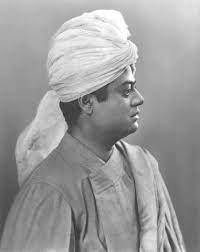
Swami Vivekananda provides a compelling illustration of this process through his inspiring and energising manner of expression, as exemplified in the following quote, “Concentrate on a single idea. Make that one idea your life — think of it, dream of it, and live on that idea. Let the brain, muscles, nerves, every part of your body, be full of that idea, and just leave every other idea alone. This is the way to success, that is the way great spiritual giants are produced (1).”
The human mind possesses extraordinary potential for formative and creative develop-ment, and tapas serves as an effective catalyst for its activation.
Two Challenges to Tapasya: Fragmentation and Limitation
Although adopting a single idea and dedicating one’s life to it may appear straightforward, implementing this concept can be arduous. The primary obstacle for most individuals lies in the confusion surrounding which idea to prioritise. With numerous ideas and tasks to undertake, there is a tendency to feel overwhelmed and unable to make a decision. In this state of indecision, one may attempt to accomplish various things simultaneously, resulting in a lack of focus and a tendency to move from one idea to another without achieving a clear central focus. This leads to dispersion and a waste of energy, as the individual is unable to achieve meaningful results. This occurs because of two reasons. First, one is the fragmentation of will-power; the second is the inherent limitation of the human mental will itself.
Psychologically, our being comprises distinct parts: the mental, vital and physical each with its own personality and will. These parts do not operate in perfect harmony, leading to fragmentation of our will-power. The mind, equipped with rational intelligence and will, is merely one player in this complex game. Other parts of our being possess their own priorities and preferences that mental intelligence and will often struggle to control. Consequently, the mind cannot consistently focus on a single idea without being distracted by other parts of our being and their needs. A well-developed and trained intelligent will, known as buddhi, can, to some extent, exert its will and concentrate on a chosen idea when supported by the heart and its emotions, free from the physical inertia. This represents the initial stage of our human tapas, of outer personality, which can yield some success, but it also has significant limitations.
Our waking state surface ego-personality, characterised by its limited will, is fragmented and constantly assailed from various subconscious, subliminal and superconscious realms. It exists as a mere fleeting wave within the vast expanse of consciousness, influenced by forces and entities beyond its comprehension. The knowledge and will of the ego-personality are narrow and restricted, rendering it incapable of effectively comprehending and mastering the broader currents surrounding it. Consequently, it becomes ensnared in a perpetual state of helpless servitude to various impulses, forces, and desires, resulting in an endless and unproductive dispersion of energy. Numerous ideas and impulses arise, remain briefly, and then dissipate without the surface personality being aware of their origins, rendering it utterly incapable of maintaining sustained focus over extended periods.
Two Pillars of Tapasya: Faith and Aspiration
The conscious mind of the waking state and its ego-personality possesses a limited capacity for action. However, it can tap into a greater power that resides within the depths of one’s heart. These two allies are known as faith and aspiration in the context of yogic psychology.
Faith (sraddha) is not merely a mental belief but a profound inner conviction deeply rooted in the heart, guiding individuals towards the necessary actions and potential outcomes. It precedes knowledge and emerges from an intuitive conviction originating from the soul within. Unlike the external nature and its desires, cravings, and impulses, which often manifest as dramatic and compulsive yet fleeting waves, faith exudes a calm and steadfast tranquillity. This inner faith serves as a firm anchor, often obscured by the mental chatter, desires, impulses, and cravings of the vital nature or the inertia of the physical body. Recognising the presence of faith within oneself is a pivotal step in the spiritual journey, enabling individuals to persevere on the path despite doubts and challenges. Faith acts as a steadfast foundation, fostering a dynamic trust that empowers individuals to overcome apparent obstacles and continue their pursuit of self-realisation. It serves as a solid base upon which the active power of tapas can be cultivated.
If faith serves as the foundation, aspiration provides the direction and force for an upward ascent, akin to a flame or a sapling growing towards the light. Aspiration is a profound yearning of the innermost being, the soul, to attain the Divine. It is an inner fire that propels the individual forward on the path, propelling them to seek higher knowledge, experience, and transformation. It is the divine will, instinctively known by the soul, guiding them towards their destination above. This is the Agni of the Vedic seers, a universal force that manifests uniquely within each individual, inspiring them to progress. However, this flame of aspiration is often intertwined with the outer nature’s confusions, mental chatter, desires, impulses, cravings, and inertia. Consequently, the seeker must cultivate the ability to silence the outer nature to purify the aspiration and discern its pure longing to surrender to the Divine. This force brings purity, the right direction, and a steadfast drive to the tapas of the outer being.
The Role of Surrender in Yogic Trans-formation
The most advanced faculty within the outer ego personality is its rational intellect and intelligent will (buddhi). However, as previously discussed, it is unable to integrate all aspects of its being independently or discern the larger forces of the subconscious, subliminal, and superconscious invading and occupying it. Therefore, the outer being must seek a superior power that can integrate and harmonise the various aspects of its being and expand its knowledge and will. This can be achieved through a profound inward journey to discover the psychological centre, the soul within, which we refer to as the psychic being in integral yoga psychology. By surrendering to its guidance, the outer being can attain this transformation.
The ego-personality and its buddhi find themselves in a state of flux, caught between the external nature and its ceaseless distractions and habits influenced by the demands of life. On one hand, the external world exerts a loud and insistent presence, while on the other hand, the silent voice of the innermost soul emerges from the depths of the heart, guided by faith and aspiration. Despite the external demands, the inner guidance operates in a state of tranquillity, devoid of drama. The buddhi must discern, trust, and surrender to this inner guidance, which manifests as intuition, the seat of faith, and the soul’s aspiration. This guidance provides the right direction and the necessary force to navigate life’s challenges.
This process enables us to discover the authentic core of our being, the true Person within. Surrounding this core, all parts of our being harmoniously integrate into a unified whole, manifesting a collective will. It is during this transformative journey that the reality of the soul emerges and becomes accessible to the mind’s intelligence, will, emotions, and dynamic energy. Consequently, the natural practice of tapas, which involves concentrating on a single idea that aligns with the soul’s aspirations, naturally arises. Furthermore, the soul’s innate inclination towards the Divine directs all other instruments towards this central object of reverence, the Divine.
From Human Tapas to Divine Tapas
The human tapas, in its initial stages, primarily involves a mental and emotional endeavour of the outer being to discipline the outer nature and redirect the journey inward to discover the soul within. This transformation is not achieved through rigorous rational thinking and analysis; instead, it occurs through a silent, profound listening to the inner guide. This inward movement and the surrender of the outer being to the inner guidance facilitate the descent of the Grace from above. This influx of Grace brings forth a greater illumination and force, a divine mind, and its power emanating from above, resulting in the divine tapas.
When the mind, vital and physical, have undergone sufficient purification and become passive and receptive, the inner guidance becomes steadfast and clear, gradually revealing the action of the divine Grace. There is an inward opening and an upward opening to what is above, and the inner guide functions as the centre within, working in harmony with the light and force descending from above. The higher workings descending upon the instrumentation further purify it and facilitate the transformative process. This descending current carries with it the divine tapas, a transcendent divine Will that surpasses all human mental constructs. It imparts its idea-force into the receptive human form, utilising the instrument of the human being for the manifestation of its divine purpose in the world.
Descending from the divine realm into the human mind are streams of inspired thoughts or visions that bestow upon it a heightened capacity for clarity and effective will in action, surpassing the capabilities of ordinary human intelligence and will. In this state, the entire human instrumentation becomes a passive conduit for the greater consciousness to utilise. The sense of effort and struggle dissipates, replaced by an influx and growth of a greater being that guides the trajectory of individual and collective progress. You become a willing instrument of divine tapas, naturally and effortlessly drawn towards the manifestation of ideas born from the seer-will and vision.
Sri Aurobindo writes:
“…if Ananda is the creator and begetter of all becoming, its method is tapas or force of the Purusha’s consciousness dwelling upon its own infinite potentiality in existence and producing from it truths of conception or real Ideas, vijñāna, which, proceeding from an omniscient and omnipotent Self-existence, have the surety of their own fulfilment and contain in themselves the nature and law of their own becoming in the terms of mind, life and matter. The eventual omnipotence of tapas and the infallible fulfilment of the Idea are the very foundation of all Yoga. In man we render these terms by Will and Faith, — a will that is eventually self-effective because it is of the substance of Knowledge and a faith that is the reflex in the lower consciousness of a Truth or real Idea yet unrealised in the manifestation. It is this self-certainty of the Idea which is meant by the Gita when it says, yo yac-chraddhaḥ sa eva saḥ, ’whatever is a man’s faith or the sure Idea in him, that he becomes (2).’ ”
Conclusion: Surrender as the Bridge
Human existence is marked by a sense of effort and inadequacy stemming from the limited knowledge and will of the ego. As we progress, we transcend this state and embrace surrender to the inner guide and the soul’s faith and aspirations. This surrender progressively aligns us with the divine Will and its divine tapas, catalysing the transformative process that leads to clarity and effortless action. In this journey, we transition from the human tapas to the divine tapas through the bridge of surrender that unites our human will with the divine will.
References
1. Swami Vivekananda The Complete Works of Swami Vivekananda, Volume 1. Mayavati Memorial ed. Kolkata: Advaita Ashrama; 1984, p. 177.
2. Sri Aurobindo. The Complete Works of Sri Aurobindo, Volume 23. Pondicherry: Sri Aurobindo Ashram Trust; 1999, p. 44.
*This article is based on a presentation delivered by the author during a NAMAH online programme, ‘Tapasya & Surrender’, that took place in August, 2024.
Manoj Pavithran, an Integral Yoga practitioner and educator, is co-founder of Purnam Centre for Integrality in Auroville, India.
Share with us (Comments,contributions,opinions)
When reproducing this feature, please credit NAMAH,and give the byline. Please send us cuttings.